

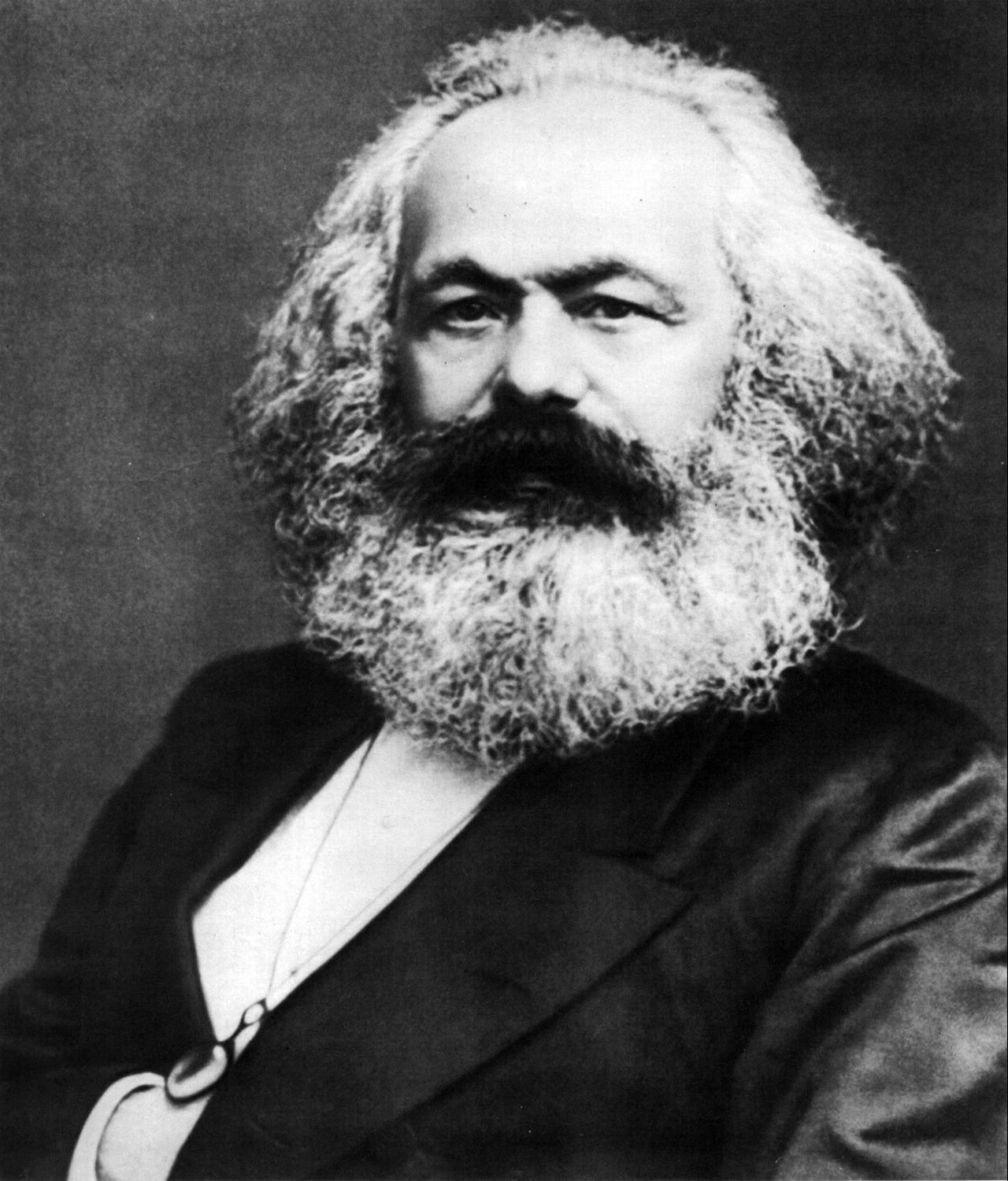
Karl Marx is usually viewed as the ultimate materialist, describing everything in brute physical and economic terms, while deriding intellectual, artistic, and philosophical and religious values as mere rationalizations for the economic status quo.
But we’ve already gotten hints that there is a kind of Romanticism lurking behind this materialist exterior. I’m referring to Romanticism in the philosophical sense: a longing to return to some imagined pure state of emotional freedom and communion with nature, unspoiled by the intellectual overgrowth of too much civilization. The unacknowledged influence of Romanticism on Marx is a major theme of Leszek Kołakowski’s Main Currents of Marxism.
Taking the Polish dissident philosopher as a guide, we have already puzzled over how it is that an ideology that claim to speak on behalf of industrial workers gave power to a bunch of intellectuals (and then, following the logic of absolute power, liquidated the intellectuals for the power-lust of a single ruler). But the biggest reason why Marxism was and remains more an ideology of the intellectuals than the workers is that its actual concerns are not material or economic, but spiritual and intellectual.
Marx’s big con was to describe his ideology as a form of materialism. Yet underneath all the talk about economics, underneath his insistence that the cultural “superstructure” of life is just determined by the brute materialist “base” of the means of production, Marx’s fundamental complaint against capitalism is a spiritual one.
I figured this out by reading Kołakowski’s explanation of what Marx meant by “alienation.”
“Alienation” is a term Marxists have thrown around for a long time, but I’ve never really understood what it means. And there’s good reason for that, because what it means is weird.
As I observed before, the subversive thing Kołakowski did in this book was to go back into the deep sources of Marxism and into Marx’s early writings, many of which had lapsed into obscurity and had relatively recently been dug up and brought back into print in the decades before he wrote Main Currents of Marxism. As I noted last time, the study of these early works was not exactly encouraged, at least not on his side of the Iron Curtain, because the Soviet regime had engaged in a major effort to dumb down Marxism and reduce it to a state-approved dogma.
It’s in some of these early works that Kołakowski finds what Marx meant by alienation, which illuminates his later writings in Capital.1 What he finds is that the root of Marx’s philosophy is a rejection of the division of labor as such.
