

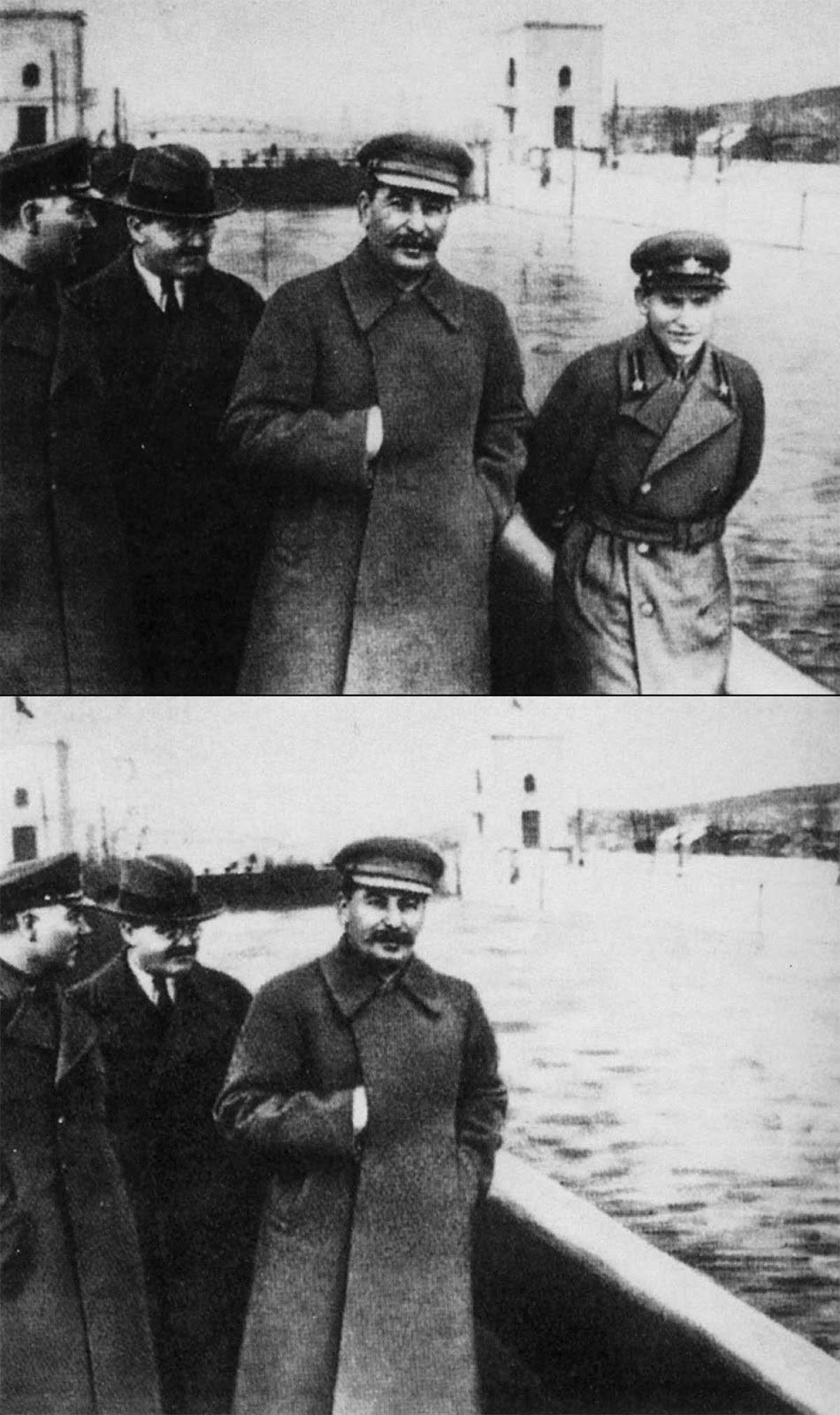
In the last installment of this series, I wrote about the weird philosophical idea which helped guarantee that a Marxist ideology centered around the “working class” of industrial factory-floor wrench-turners would end up being run by a clique of middle-class intellectual misfits who appointed themselves to administer The Revolution on behalf of the proletariat.
But the joke was on these intellectuals, because they didn’t really get the power. They were, in fact, the next to be crushed in their own machine.
In Main Currents of Marxism, Leszek Kołakowski describes the pattern.
After the resistance of all social classes—proletariat, peasantry, and intelligentsia—had been overcome, after all forms of social life not ordained by the state had been crushed out of existence, and the opposition within the party had been destroyed, it was time to subdue the last element that might—though it did not in practice—threaten the completeness of totalitarian rule under a single despot: namely the party itself, the instrument which had been used to stifle and destroy every other rival force in the community. The destruction of the party was achieved during the years 1935-9, and established a new record in the conflict between the Soviet regime and its own subjects.
The idea of the “dictatorship of the proletariat” was supposed to mean that the proletariat as a whole would just dictate production, directly, somehow. But of course there is no “somehow” for doing this, so a putatively representative institution, the party, had to be built up and given that dictatorial power. But there could be internal divisions within the party, disagreements about how to proceed, and it was easy to portray one side or the other of those disagreements as an attempt to thwart the rule of the proletariat and serve as a vehicle for bourgeois reactionary forces—all the more so since any sensible response to communist economic policies is probably going to looks more like capitalism.
Kolakowski describes the process by which dissent within the party and the jostling of opposing party “fractions” was suppressed. But what this implies, if the party is going to follow only one policy with no debate or dissent, is that ultimately one person is going to be dictating everything. The “dictatorship of the proletariat” inevitably becomes just the dictatorship of one guy.
Hence the internal purge of the party to ensure loyalty to that one man above all—including above Marxism itself.
The passage above is from the beginning of Kołakowski’s chapter on Stalin’s Great Purge, and he provides the most interesting and convincing perspective on the purge that I have ever read.
