

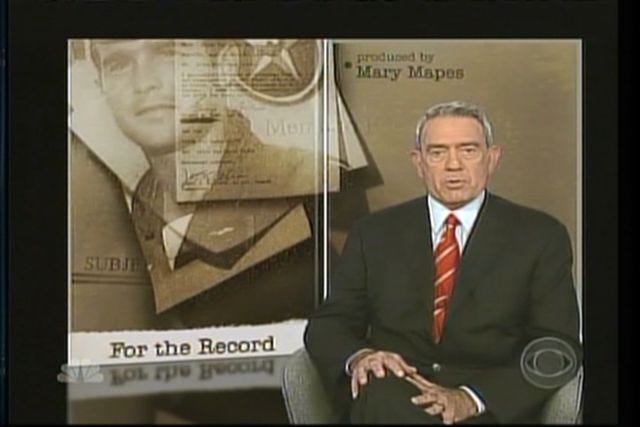
Let me begin by telling you a story from ancient history, by which I mean about 20 years ago. A few longtime readers may remember this incident, because I covered it not long after I first started the online version of this newsletter.
In the months before the 2004 presidential election, the flagship CBS news show “60 Minutes” aired a report that claimed to find evidence George W. Bush demanded special treatment while serving with the Texas Air National Guard in the final months of the Vietnam War. The report was debunked within hours of airing because bloggers analyzed the memos and demonstrated they could not have been produced on the kind of typewriter used by the Texas Air National Guard in 1973, or by any typewriter. The documents were consistent, instead, with Microsoft Word, a program that would not be available for another ten years.
Here’s what makes this story ancient history: The false report and the network’s failure to authenticate the documents was considered a major scandal. CBS fired Dan Rather, one of its most widely known and trusted anchors—the whole affair was known as “Rathergate”—along with his producer, and the network apologized.
A report that was supposed to hurt Bush in his re-election campaign backfired and arguably ended up helping him, and the incident heralded the rise of blogs and the internet as competitors to the “legacy media.”
At the time, a lot of people were optimistic, myself included, that this was a blow in favor of the truth. The internet would help make sure that established media could not promote a falsehood without having it quickly debunked.
Yet it hasn’t entirely turned out that way, and right now we are at the tail end of what you might call a “post-truth” election.
