

Readers of this newsletter have probably seen the news that I did not win the Democratic primary for Congress in the Fifth District.
Voters went with the known, comfortable, established guy. I coaxed a couple of thousand people, in a fairly low-turnout primary, to vote for a more constitutionally focused agenda, but I was afraid from the beginning that local Democrats really, really just wanted to go with their guy. You can see this in a lot of other Virginia races (such as in the First District, just to my east) where voters went with the established choice.
I suppose that’s natural. One of the things that struck me about running for office is that if you want to run for Congress, the best time to start is fifteen years ago: enough time to build up name-recognition, contacts in your political party, influential local leaders who owe you favors, and a fundraising network. (The guy who won in my district is from a prominent local family, so he had all of that from the get-go.)
In normal circumstances, this lends a certain stability and even conservatism to our political system, but it also means that the system is very slow to react to new events. So if someone gets into high office and starts tearing apart the whole American political system, people are reluctant to change their ideas about what their top political priorities are and what sort of person they need to represent them.
People liked my message, mind you. They agreed with it. As I was speaking to Democratic Party groups, I saw a lot of people nodding along. But they did not find it compelling enough to choose me over the familiar guy. Or perhaps they assumed he would do all of the same things, which—well, I hope so.
So what next? Fortunately, running for office is not the only way I have of influencing the future of our country.
I ran for Congress and stayed in the race because I was not fully confident that the guy who eventually won the nomination would stand up for the constitutional reforms we need. But I am 100% confident he will do so if it is clearly popular and polls well. That’s the case across the country. It would be nice if we had political leaders with clear principles, foresight, courage, and the ability to think in constitutional terms. To the extent we can’t rely on that, we have to do our best to marshal the pressure of public opinion.
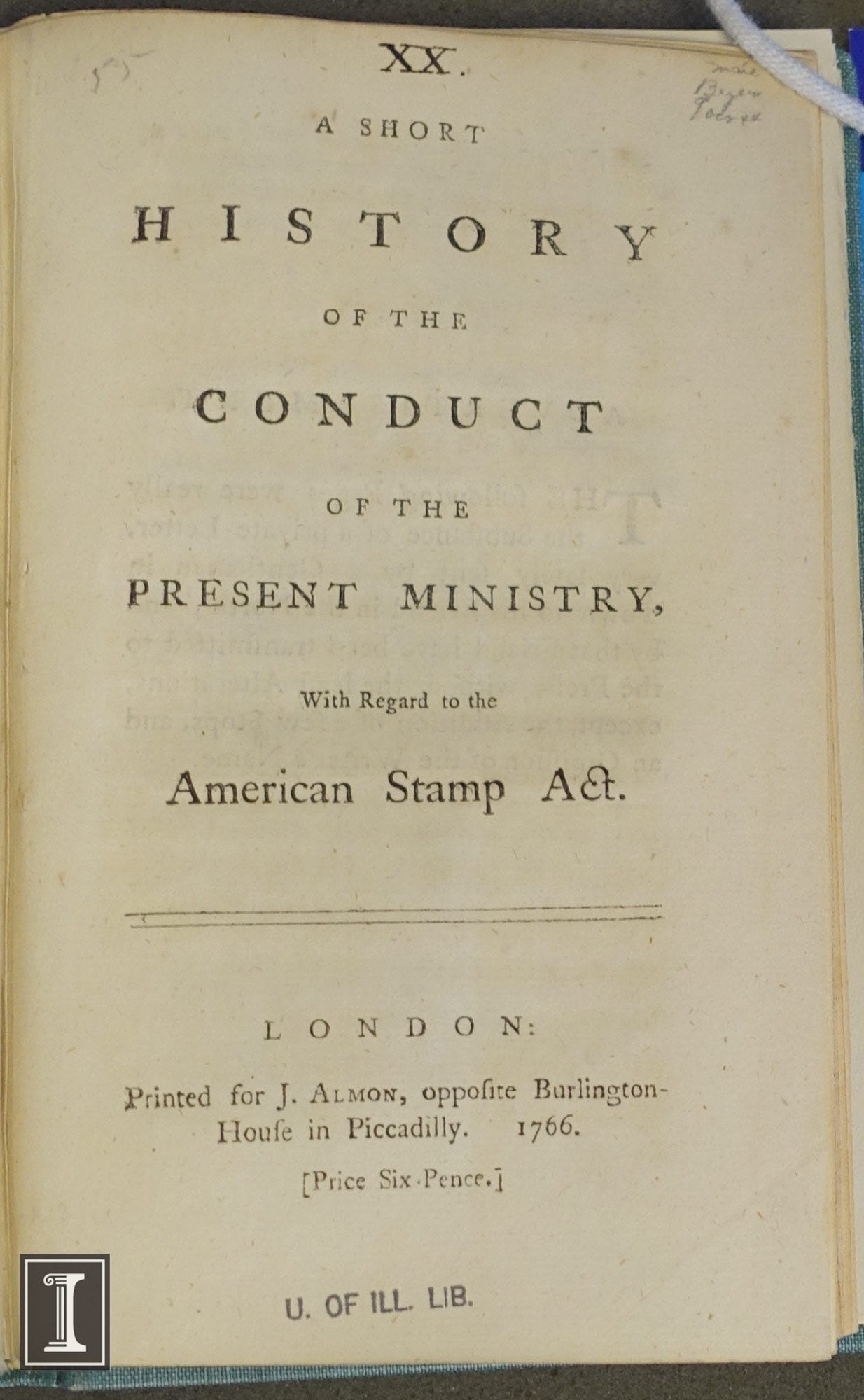
In short, it’s back to pamphleteering for me. I’ve been writing recently about the influence of ideological pamphlets on the American Revolution, and that’s the model I’ll be following.
In immediate practical terms, that means rebuilding my business as a writer. You will see my free-lance articles appearing again soon at some of the old places and a few new ones. Most of all, I’ll be reinvigorating this newsletter.
The hardest thing about running for office is having to do it while still working for a living. (This is why most congressional candidates have either already made a fortune or inherited one.) It’s harder still when the work you used to do for a living included a lot of writing about politics, and now you can’t do that without running afoul of campaign finance laws. I took a hit for doing that, losing a small but significant portion of my subscribers who fell off the list presumably because I was no longer providing a steady stream of political commentary, at least not here.
If you’re one of the people who lapsed as a paying subscriber, now is the time to come back on.
Here’s what I have coming up:
I’ve been thinking that whether I win or lose, I have a hell of an article to write on what I’ve learned about politics by actually engaging in it rather than observing it from the outside. It will be eye-opening—and offered at first exclusively for paying subscribers.
I’ll be going over some stories I’ve missed during my campaign, or ones where I’ve linked to interesting news reports but haven’t had the opportunity to draw out their full meaning.
This will include the rise of “democratic socialism” in the Democratic Party. It’s not that I was avoiding the issue. “Democratic socialism” just isn’t much of an issue, one way or another, in the Fifth District. But I’ll try to put the national phenomenon into some kind of perspective.
In the next day or so, I’ll put up my review of the recent film version of The Odyssey. For those who know their Ancient Greek history, I can say that Christopher Nolan set out to film The Odyssey and ended up filming the Melian Dialogue. If you have no idea what that means, stay tuned, I’ll explain it all.
I’ll offer a defense of data centers against the latest reborn NIMBY crusade—something I got a look at up close on the campaign trail. But I’ll also go into more detail about my warnings that artificial intelligence, which is the main impetus behind the giant investment bubble in data centers, is overhyped.
And as promised above, I’ll have a lot more to say on the issue that animated my campaign: the reforms we need to restore the American system for the next 250 years—as well as new commentary on the history, philosophy, and political theory of democracy.
Stay tuned.
Running for Congress very much took me outside of my comfort zone, which is sitting in front of a laptop writing, and the one positive thing about losing the primary is that I will have a lot more time to spend in a quiet room alone with my words. They have missed me, and I have missed them. And readers of this newsletter will be the beneficiaries.
Like others, I’m sorry about the outcome. But, we have to have one candidate that thinks like you; then two; then more. I thank you for introducing your ideas.
My heart sank when I saw the results last night. I think you could have made a big difference. I am glad to be able to read your writing again, though.